The evolution of certificates of authenticity: from royal seals to blockchain
How the ways of proving authenticity have changed, from royal seals to holograms, NFTs and online registers, and what remains irreplaceable.
Contents
In the worlds of art and history, certificates of authenticity have become enormously valuable. They act as guardians of authenticity against forgery, for works of art as much as for historical signatures and old documents. But they have not always looked as they do today: their history is as varied as the items they certify.
From royal seals to modern certificates
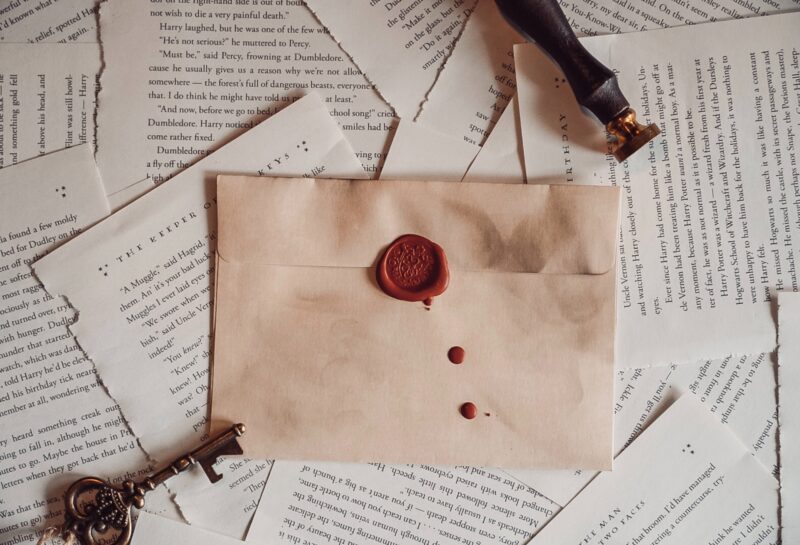
In Antiquity and the Middle Ages, seals and signatures were the marks of authenticity par excellence. Kings stamped their seal on important documents, creating a link between the ruler and the authenticity of the content. That tradition has survived to the present day, although the process has become far more sophisticated.

The technology era: holograms and fingerprints
Technological advances brought new authentication methods: holograms, special inks, microprinting, serial numbers and digital fingerprints. They all pursue the same goal: to preserve the integrity of works and documents and make them harder to copy.
Even so, in the digital age, the handwritten signature remains irreplaceable. The author's signature, like a personal fingerprint, is still the cornerstone of authenticity and connects the past with the present. That is why the expert examination of the signature remains at the heart of any authentication of autographs and documents.
Certificates of authenticity and blockchain
In the digital world, blockchain technology has made it possible to create records that are hard to alter. NFTs (non-fungible tokens) link a work to a unique code recorded on a blockchain, which makes it easier to track ownership and transactions of digital works and has created a more transparent secondary market.
It is important, however, to understand its scope: a blockchain record guarantees that the record has not been changed, but it does not in itself prove that a signature or a physical object is authentic. If the data recorded is wrong, the record simply preserves that error. Authenticating a physical item still requires an expert's examination.
Beyond the physical guarantee
Certificates of authenticity are not mere documents: they are chronicles that tell the story of a work or a document. Each certificate carries with it the echo of the artist's creativity or the historical significance of the item.
Authenticity is a commitment to the truth. In a market full of imitations, certificates are the foundation on which trust between artists, collectors and the public is built, and they help protect our cultural and artistic heritage.
Where we are heading
The future combines the best of each era: an expert examination of the item, a physical certificate that is hard to copy, and an online register where it can be checked. That is the formula of the VS Certificate, with its verifier.
Frequently asked questions
Does an NFT prove that a signature is authentic?
Not in itself. It guarantees that the record has not been altered, but the authenticity of the physical item depends on an expert's examination.
Would you like to certify a signature?
Send me a few photos and I'll tell you what certification costs. The preliminary assessment (€25) is deducted from the price of the certificate. Physical + digital or digital-only certificate, with a verifiable number.
Juan García Nicolás · Graphologist and forensic handwriting examiner
Trained at Ipsigrap, he personally signs every VS Certificate. Service in English and Spanish. More about me